Time zones are an essential part of our globalized world, helping us coordinate activities, meetings, and events across different regions. One commonly referenced time zone is PST, or Pacific Standard Time. But what exactly does PST mean, and how can you quickly determine the current time in this zone? This article provides a comprehensive guide to understanding PST, how it compares to other time zones, and practical tips for accurate time conversion.
What Is PST?
Definition of Pacific Standard Time
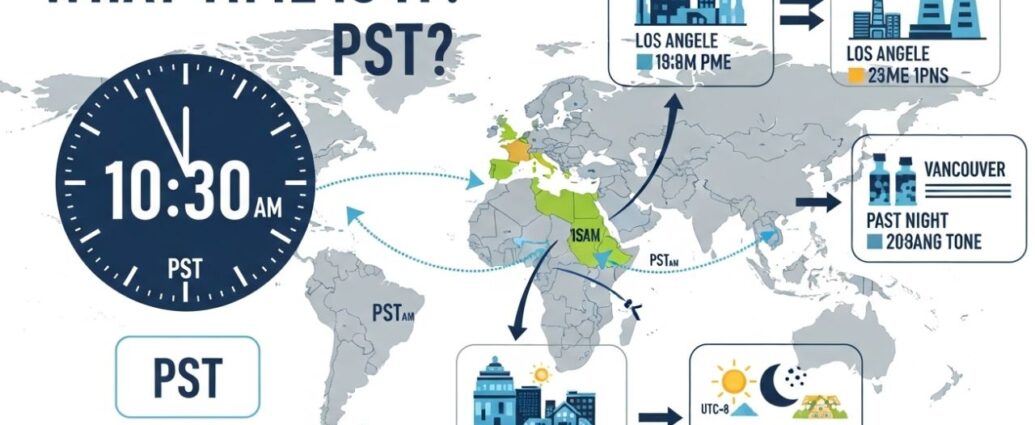
PST stands for Pacific Standard Time, which is the time zone for the western part of the United States and Canada. It is 8 hours behind Coordinated Universal Time (UTC−8). Cities in this time zone include Los Angeles, San Francisco, Seattle, and Vancouver. During the winter months, these regions observe PST.
Difference Between PST and PDT
It’s important to note the distinction between PST and PDT. Pacific Daylight Time (PDT) is observed during daylight saving months, typically from March to November. PDT is UTC−7, one hour ahead of PST. When daylight saving ends, clocks revert to PST. This shift can cause confusion if you’re coordinating with people in different time zones.
How to Tell What Time It Is in PST
Using Digital Devices
Most smartphones, computers, and smartwatches can automatically adjust to PST based on location settings. For example, if you’re traveling or using a VPN, ensure your device is set to the correct time zone to get accurate PST readings.
Online Tools and Time Converters
Several online tools make it easy to check PST. Websites like timeanddate.com or worldclock.com allow you to enter your current time zone and convert it to PST instantly. This is especially useful for scheduling calls or meetings with colleagues or friends on the west coast.
Converting PST to Other Time Zones
PST to EST
Eastern Standard Time (EST) is three hours ahead of P ST. For instance, if it’s 12:00 PM P ST, it will be 3:00 PM EST. Understanding this difference is crucial for business communications and live events.
PST to GMT
Greenwich Mean Time (GMT) is 8 hours ahead of P ST. So, 12:00 PM P ST corresponds to 8:00 PM GMT. For international collaboration, knowing the P ST-to-GMT conversion helps prevent missed deadlines or meetings.
PST to Local Time
If you live in a different time zone, the easiest way to convert P ST is to calculate the UTC offset difference. Many smartphone apps and calendar software can do this automatically to ensure you never get confused about timing.
Why Understanding PST Matters
Pacific Standard Time is widely used in media broadcasts, business operations, and online events. Knowing what time it is in P ST helps in:
-
Scheduling virtual meetings across the U.S. and internationally.
-
Watching live events, such as sports or entertainment shows, in the correct time.
-
Travel planning for flights and accommodation on the west coast.
Tips for Keeping Track of PST
-
Enable world clocks on your smartphone or computer for P ST.
-
Use calendar apps that automatically convert time zones.
-
Check daylight saving changes to switch between PS T and PDT correctly.
-
Double-check meeting times when communicating internationally to avoid errors.
Conclusion
Pacific Standard Time (P ST) plays a vital role in coordinating schedules across different regions. By understanding what time it is in P ST, the difference from other time zones, and using available tools for accurate conversion, you can ensure smooth communication and planning. Whether for work, travel, or entertainment, knowing P ST helps you stay on time and avoid unnecessary confusion.