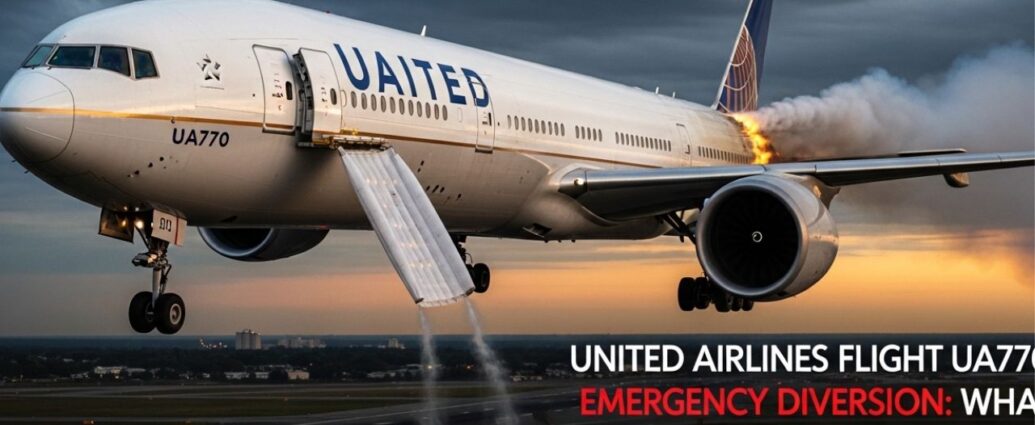
United Airlines Flight UA770, a Boeing 787‑9 Dreamliner, was operating a routine transatlantic service from Barcelona El Prat Airport (BCN) to Chicago O’Hare International Airport (ORD) when it experienced a mid‑flight situation that led to an emergency diversion. The flight, carrying 257 passengers and 12 crew members, was cruising at altitude when the crew detected a potential issue warranting immediate precautionary action.
What Led to the Emergency Diversion
Technical Alert Over the Atlantic
While flying over the North Atlantic at cruising altitude, flight systems aboard UA770 flagged a possible irregularity in the cabin pressurization system. Although there was no confirmed loss of pressure, any indication of a pressurization issue is treated seriously in aviation because it can directly affect passenger safety if not addressed promptly.
Declaring the Emergency
In response, the flight crew followed strict safety procedures by declaring a general emergency to air traffic control. Pilots typically use the universally recognized “squawk 7700” code in such situations, which informs ground control and emergency services that the aircraft needs priority handling.
Why UA770 Was Diverted to London
Choosing the Diversion Airport
After evaluating available options, the crew coordinated with air traffic control and chose London Heathrow Airport (LHR) in the United Kingdom for the diversion. Heathrow was selected because it is a major international hub with full emergency services, maintenance facilities, and space to manage large aircraft and passengers efficiently.
Safe Landing and Aftermath
The Boeing 787‑9 touched down safely at Heathrow without deployment of emergency oxygen masks, indicating the situation was managed before it escalated into a critical threat. Once on the ground, passengers disembarked normally and were provided assistance such as rebooking on onward flights, meal vouchers, and, when needed, hotel accommodations due to the change in travel plans.
What Emergency Diversions Mean
Prioritizing Safety Above All
Emergency diversions like UA770’s are precautionary safety measures designed to protect everyone on board. Modern aircraft systems are configured to alert crews to even small anomalies, allowing pilots to take conservative actions well before a situation becomes dangerous.
How Airline Crews Handle Emergencies
Flight crews train extensively for emergency scenarios and work closely with air traffic control to reroute the aircraft to the nearest suitable airport when needed. Declaring a general emergency ensures priority landing, cleared airspace, and readiness of ground responders. These protocols help ensure that diversions are safe and organized rather than chaotic.
Passenger Experience During the Diversion
Calm and Coordination
Passengers aboard UA770 remained safe throughout the diversion. The captain and cabin crew maintained communication and followed procedures designed for calm resolution of unexpected events. Successful completion of the diversion without injuries reflects not only the robust aircraft design but also the high level of crew training.
Support After Landing
After landing at Lufthansa, United Airlines ground teams provided support for travelers affected by the diversion. In addition to rebooking arrangements, airlines typically offer meal support and accommodations if overnight stays are required. This ground support is part of industry best practices when flights are disrupted due to safety concerns.
Common Causes of Emergency Diversions
While the UA770 diversion stemmed from a technical alert related to pressurization, aircraft diversions can occur for various reasons:
-
Technical or mechanical alerts flagged by onboard systems.
-
Medical emergencies involving passengers or crew.
-
Environmental or weather issues affecting safety.
-
Other system warnings such as electrical or hydraulic alerts.
These scenarios trigger pilots and airline operations teams to act conservatively to ensure safety.
Misconceptions About Emergency Diversions
Diversions Are Not Always Crises
Many passengers worry that an emergency diversion signals a serious failure. In reality, diversions are often precautionary and proactive. Advanced monitoring systems in modern aircraft provide early detection, and crews respond before there is any real danger, ensuring passenger safety.
Safety Systems Are Highly Redundant
Aircraft like the Boeing 787‑9 have multiple redundant systems. Even if one system throws a warning, backup systems can maintain safety and stability while the aircraft reroutes for inspection or precautionary landing.
Broader Context in Aviation Safety
Incidents like United Airlines Flight UA770 demonstrate how aviation safety protocols function in real time. Diverting a flight due to a pressurization alert may seem dramatic but reflects a safety‑first culture in commercial aviation. Airlines and regulatory bodies constantly refine procedures based on such events, improving training, equipment, and communication to reduce the likelihood of escalation.
Conclusion:
The United Airlines Flight UA770 emergency diversion showcases how a routine flight can change course when systems detect even minor irregularities. With more than 250 passengers on board, the flight crew acted quickly, declared a general emergency, and diverted to London Heathrow Airport, where the aircraft landed safely and without injuries.
Rather than reflecting a catastrophic failure, this incident highlights the strength of aviation safety systems and crew preparedness—ensuring that flying remains one of the safest modes of travel.